
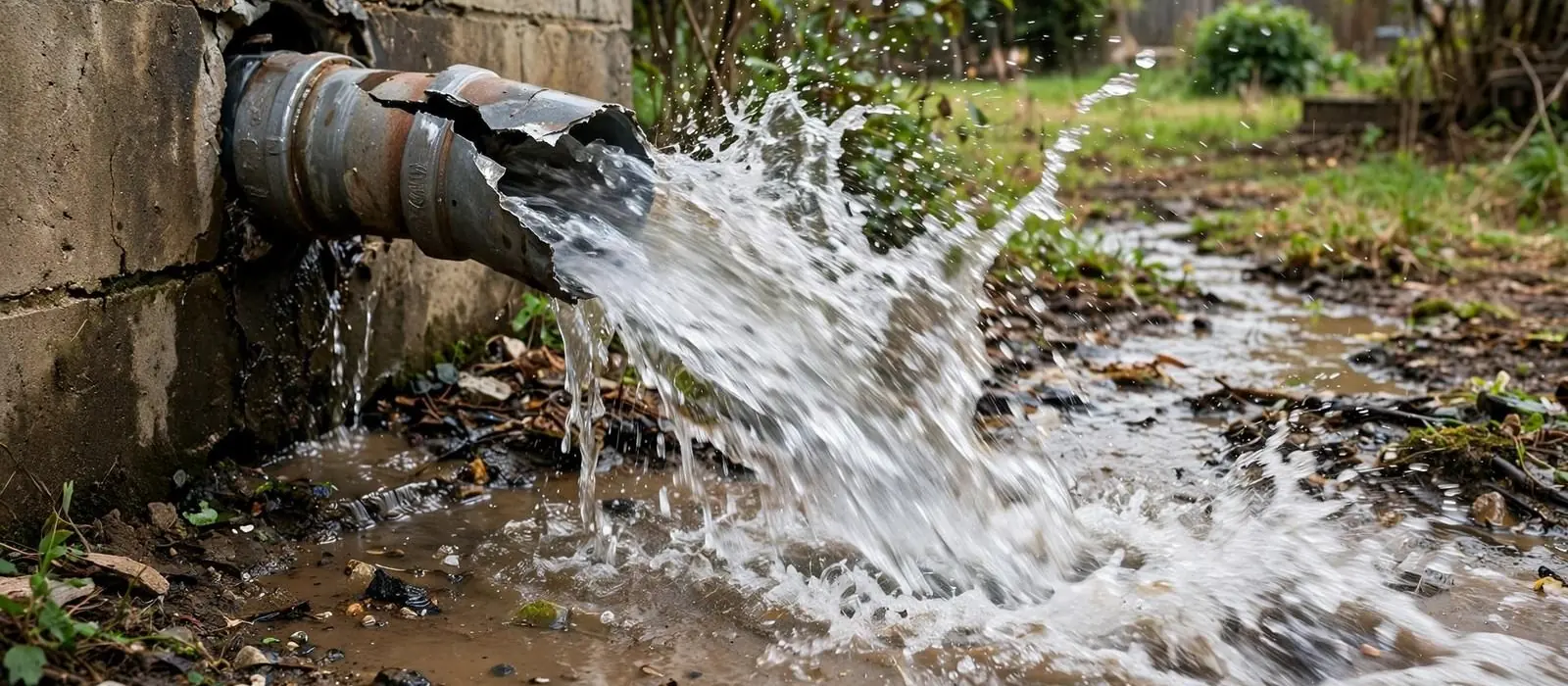
A pipe has burst and water is still flowing
Call the 24/7 line as soon as the water is shut off, or while you are heading to the valve. Burst pipe repair in Suwanee, GA runs at night, on weekends and on holidays, and the call is the same as it is at noon.
While you wait, keep working the shut-off and the cleanup. Every minute of flow adds gallons, and water in a ceiling or wall cavity can travel a long way from the break.
A burst pipe is a split or break in a pressurized water line, often from freezing, corrosion or a failed joint. The water keeps coming until the supply is closed, which is why the valve matters more than any mop.
- Close the main shut-off valve. Turn a round handle clockwise until it stops, or turn a lever a quarter turn so it sits across the pipe.
- Open the lowest faucet in the house and flush the toilets once to drain remaining water from the pipes.
- Switch off power at the breaker panel only if you can reach it without stepping in water. If not, stay out and call.
- Turn off the water heater so it does not heat an empty tank.
- Move valuables, rugs and electronics out of the wet area and photograph the damage for your insurer.
Finding the valve that stops the water
Most people have never touched their main valve, so find it before you need it. Two valves matter, and the first one is inside your control.
The main shut-off at the house
It usually sits where the water line enters the building, often in a garage, basement, utility room or on an exterior wall near the water heater. Look for a lever handle or a round wheel.
A lever that sits across the pipe is closed. A stuck round handle may need both hands and slow turning, because forcing an old valve can snap it.
The meter and county side
The meter box is usually in the front yard under a metal cover. Gwinnett County Water Resources owns the meter and the pipe up to it, so leave the county side alone unless you have to.
If the house valve is stuck or the break is outside, call the county's 24/7 dispatch line for water emergencies at 678.376.7000.
How a burst pipe shows itself
Some breaks are loud and obvious. Others are slow and hidden inside a wall or ceiling.
A ceiling stain that is growing
Brown, sagging drywall means water is pooled above it. Poke a small hole only to relieve the weight, with a bucket underneath.
No water, or a trickle, at the tap
A break upstream drops pressure at the fixtures. If the whole house is affected, check the meter.
The sound of running water with nothing on
A split line hisses or splashes inside walls, and the sound carries at night.
A wet spot in the yard on a dry day
Water appearing between the meter and the house can mean the buried line has split.
Freezing weather and the pipes that split
Gwinnett County Water Resources says the temperature does not drop below freezing very often in Georgia, but when it does the water in home plumbing can expand and break pipes. Its advice is to drip faucets overnight and open cabinet doors when the temperature dips below 32 degrees.
These are county-level facts, not Suwanee counts. The Gwinnett hazard plan records a significant winter storm on January 28 and 29, 2014, with one to three inches of snow, and a January 2011 event with about two inches of ice and three days below zero. It also says the county can expect a winter storm about every two years.
The practical lesson is that the pipes at risk are the ones on cold exterior walls, in garages and in unheated crawlspaces. Insulate them, keep the garage door closed, and let a cold-night drip run on the faucet farthest from the main.
Temporary fixes versus a proper pipe repair
A clamp or tape can buy you time. It does not repair a pipe that burst because of age or freezing.
Temporary measures
- A pipe repair clamp or push-fit coupling on a straight section
- Self-fusing silicone tape wrapped tight
- Closing the valve and waiting for a plumber
- Works only on a clean, accessible break
Professional repair
- Cutting out the damaged section and replacing it with new pipe
- Checking the rest of the line for more weak points
- Pressure testing once the repair is done
- Fixing the cause, such as an exposed or failing run
Which pipe, which kind of break
The material changes how a pipe fails and how it gets fixed. This is a general guide.
| Pipe type | How it often fails | Typical repair |
|---|---|---|
| Copper | Splits along the length when frozen, pinholes with age | Cut out the section and fit new copper or a coupling |
| PEX | Cracks at fittings, usually survives a freeze better than rigid pipe | Replace the damaged piece with a crimped or expansion fitting |
| CPVC | Becomes brittle and cracks, often at joints | Cut and replace the section with new CPVC |
| Galvanized steel | Rusts from inside, leaks at threaded joints | Replace the section, and ask about the rest of the line |
Ask the plumber to show you the failed section. It tells you whether the problem is one spot or the whole run.
What changes the price of a burst pipe repair
A split in an open garage is a short job, and one inside a finished ceiling is not. You hear the price before work starts.
Where the pipe is
An exposed pipe is quick. A wall or ceiling needs an opening and patching.
Pipe material
Copper, PEX and CPVC use different fittings and tools.
Length of the damaged section
One split is a repair, several suggests a longer replacement.
Water damage afterward
Drying, drywall and flooring are separate from the plumbing repair.
Time of day
A pipe that bursts at 2 a.m. is priced as an emergency visit, which can differ from a booked daytime repair.
Most home policies cover sudden burst-pipe damage, but they often exclude damage from long-term seepage or a pipe that failed from wear. Call the insurer early, send photos and keep the plumber invoice.
Want your real number?
Describe the job on the phone and get a clear price before any work starts.
After the water stops: protecting the house
The repair ends the flow. These steps limit the secondary damage.
- Photograph and video every wet surface before cleanup.
- Run fans and open windows to dry the area.
- Remove soaked carpet pad and wet insulation as soon as it is safe.
- Call the insurer and ask about their required steps.
- Keep every receipt, including the plumbing invoice.
Mold can begin to grow on wet drywall and wood within a day or two, so drying quickly matters as much as the pipe repair.
When the break is outside or comes with a leak
A break between the meter and the house is a water line repair job. A leak that is not a full split, such as a slow loss behind a wall, belongs to leak detection, and a leak under the floor of a slab home is covered in slab leak repair. Homeowners across the county in Duluth call the same emergency number for burst pipes.
According to the Gwinnett County Water Resources freezing-weather guidance, water in home plumbing can expand and break pipes when the temperature drops below freezing, and the county suggests dripping a faucet overnight and opening cabinet doors. The state minimum standard for plumbing work in Georgia is the International Plumbing Code with Georgia amendments.
Burst pipe questions
Yes. Yes, a burst pipe at 2 a.m. gets the same answer as one at noon, because the 24/7 line never closes. Close the main valve, stay out of wet electrical areas, and call.
Usually where the water line enters the house, often in a garage, basement or utility room. Find it now, before an emergency, and make sure it turns.
Only if you can reach the panel without standing in water. If not, stay out and call. Never touch electrical equipment while standing in wet areas.
If you suspect a crack, close the main valve and open the nearest faucet before it thaws. Warm the pipe slowly with a hair dryer and never an open flame. A crack often shows up as the ice melts, so call if you see water.
Gwinnett County Water Resources runs a 24/7 dispatch line for water emergencies at 678.376.7000. Use it if the house valve is stuck or the break is on the county side.
Often, for sudden damage. Wear and long-term leaks are commonly excluded, so read the policy and call the insurer early.