
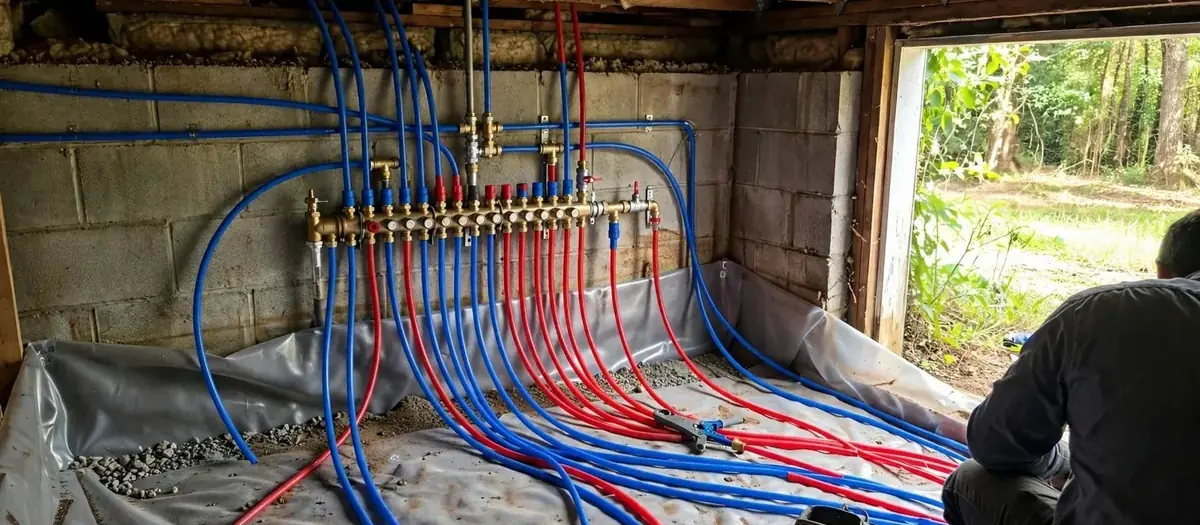
What a repipe actually replaces
A repipe replaces the pressurized water supply lines in a house, the pipes that carry water from the main shutoff to every sink, shower, toilet and appliance. It usually leaves the drain, waste and vent pipes alone, because those fail for different reasons and are a separate job.
Some repipes cover the whole house. Others replace one stretch, such as the line feeding a bathroom group, the run through a crawl space, or a single failing section tied back into good pipe.
The pipe from the street meter to the house is a different question. Gwinnett County Water Resources says everything on the customer side of the meter is the homeowner's responsibility, so a repipe can include that yard line when it is the weak point.
Signs the pipes, not the fixtures, are the problem
One leaky faucet is a fixture problem. A pattern across the house points at the pipe.
Repeated leaks in different places
A pinhole in the kitchen this year and another in the hall bath next year often means the metal is thinning all along the line, so patching one spot only waits for the next.
Brown or rust-colored water at the tap
Rust in the water when you first open a faucet points to corroding steel or iron pipe somewhere in the supply.
Low flow at every fixture
Galvanized steel can narrow from the inside as rust builds up, so showers weaken even though the meter and the pressure reducing valve test fine.
Stains, bubbling paint or damp drywall
A wall that stays damp or a ceiling stain that returns after drying can mean a slow leak on a joint you cannot see.
A known problem pipe material
If a plumber has identified polybutylene or aging galvanized in your walls, replacement is a planning question, not a wait-and-see one.
PEX, copper, CPVC and the rest, side by side
There is no single best pipe. The choice depends on the house, the water, and how much wall has to be opened.
| Material | Where it does well | Honest drawback |
|---|---|---|
| PEX | Flexible tubing that snakes through framing with fewer joints, which means less wall opened up | Not for sunlight or outdoor exposure, and it needs the right fitting system |
| Copper | Rigid, long used in homes, and fine in hot water lines and exposed runs | More joints to solder, more labor, and a material cost that moves with the metal market |
| CPVC | Rigid plastic that is easy to cut and glue, often chosen for budget jobs | Can turn brittle with age and heat, and it is less forgiving when bumped |
| Galvanized steel | Already in many older houses, so it is what you may be replacing | Corrodes from the inside and is not what anyone should choose for new work |
Ask the installer why they recommend one material for your house, and which fitting system they use.
Whole house or just one section
A partial repipe makes sense when one branch has failed and the rest tests sound. Replacing the bathroom group supply lines, for example, can cure repeated leaks without opening every wall.
The catch is the tie-in. Joining new pipe to old pipe of a different metal needs the right transition fitting, and the old pipe next to the joint may fail next if it is the same age as the section you replaced.
When partial is the better call
Leak history is limited to one area, the rest of the pipe is a modern material, and water pressure and color are normal elsewhere.
When whole-house wins
Several leaks in different rooms, rust in the water at every tap, or a material known to age out. Doing it once means less disruption than three smaller jobs spread over several years.
What open-wall work looks like in your house
Repiping is not invisible. Pipes live inside walls, floors and ceilings, so the work means access holes.
Walk-through and routing
The plumber looks at the attic, crawl space or basement first. Pipes are routed through those open areas wherever they can, to keep wall cuts to a minimum.
Water shut off and drained
The supply is closed at the main and the old lines are drained. Plan on stretches of the day without water and ask how long the stretches will be for your house.
Access cuts in drywall
Small openings are cut at fixtures and corners so new pipe can be fed through. Ask who handles patching and painting, which is often a separate trade.
New pipe, pressure test, restore
New lines are connected, filled and pressure tested for leaks before the walls are closed. The city may inspect the work afterward.
Suwanee housing age and what it means for your pipes
The city's own housing plan says 60 percent of Suwanee's housing units date from 2000 or later, and that the count jumped from 825 units in 1990 to 3,144 by the end of that decade. That tells you about home age, not about which pipe is inside your walls.
So check your own house. A home from the 1990s boom is now past thirty years old. Look at the pipe where it is exposed, near the water heater or under a sink, or ask a plumber to identify it.
Gwinnett County Water Resources reports very soft water at 1.05 to 1.87 grains per gallon, with an average of 1.34. Soft water leaves little mineral scale, so if flow has dropped, the likelier suspects are pipe corrosion or a failing pressure reducing valve, which is the homeowner's to maintain.
What moves the price of a repipe
A two-bath ranch and a three-story house with a finished basement are very different jobs. You hear the clear price before work starts.
Size and stories
More fixtures and more floors mean more pipe, more fittings and more routing.
Pipe material
PEX, copper and CPVC differ in material and labor, and copper moves with the metal market.
Access
An open crawl space is simple. Finished walls, tile and tight attics add time.
Whole house or partial
Replacing one branch costs less than the full house, but see the tie-in issue above.
Patching and finish work
Drywall, paint and tile repair may be quoted separately or left to you, so ask.
Home insurance generally covers sudden accidental water damage, not the cost of replacing worn pipe. Read the policy, and ask your agent whether a repiped system changes your coverage or premium.
Want your real number?
Describe the job on the phone and get a clear price before any work starts.
Permits, digging and what to ask first
The City of Suwanee lists changes to plumbing as work that needs a building permit, and its inspections line is 770-945-8996. Ask your installer who pulls the permit and whether an inspection is scheduled before walls are closed.
If the job includes a yard supply line, call 811 or submit a ticket at georgia811.com at least three business days before anyone digs. The same applies to a homeowner doing the digging.
A repipe often turns up a leak that started the conversation, and pinpointing the leak first can show whether you need the whole house or one branch. If the water heater connections are old too, a water heater replacement visit is a natural time to renew them, and a bathroom remodel pairs with new plumbing installation.
Homeowners near Lawrenceville can ask the same questions and call the same number.
According to the City of Suwanee, changes to plumbing need a building permit, and the inspections office takes questions at 770-945-8996. The state minimum standard for the piping itself is the International Plumbing Code with Georgia amendments, and a licensed plumber can tell you which materials it allows.
Repiping questions
It depends on the size of the house, the access and the material. Ask for a schedule that says when the water is off, and plan around a day or more of disruption for a whole house.
Neither wins everywhere. PEX needs fewer joints and less wall opened. Copper has a long record and works well in exposed runs. Ask the installer why one fits your house.
Yes, when the remaining pipe tests sound and the leaks are confined to one branch. A plumber can also tell you if the old pipe next to the tie-in is likely to fail soon.
Usually some. Pipes run through attics, crawl spaces and basements where they can, which keeps wall cuts small, but fixtures and tall walls typically need access holes.
The City of Suwanee lists plumbing changes as needing a building permit. Call 770-945-8996 or ask your installer who pulls it for your address.