
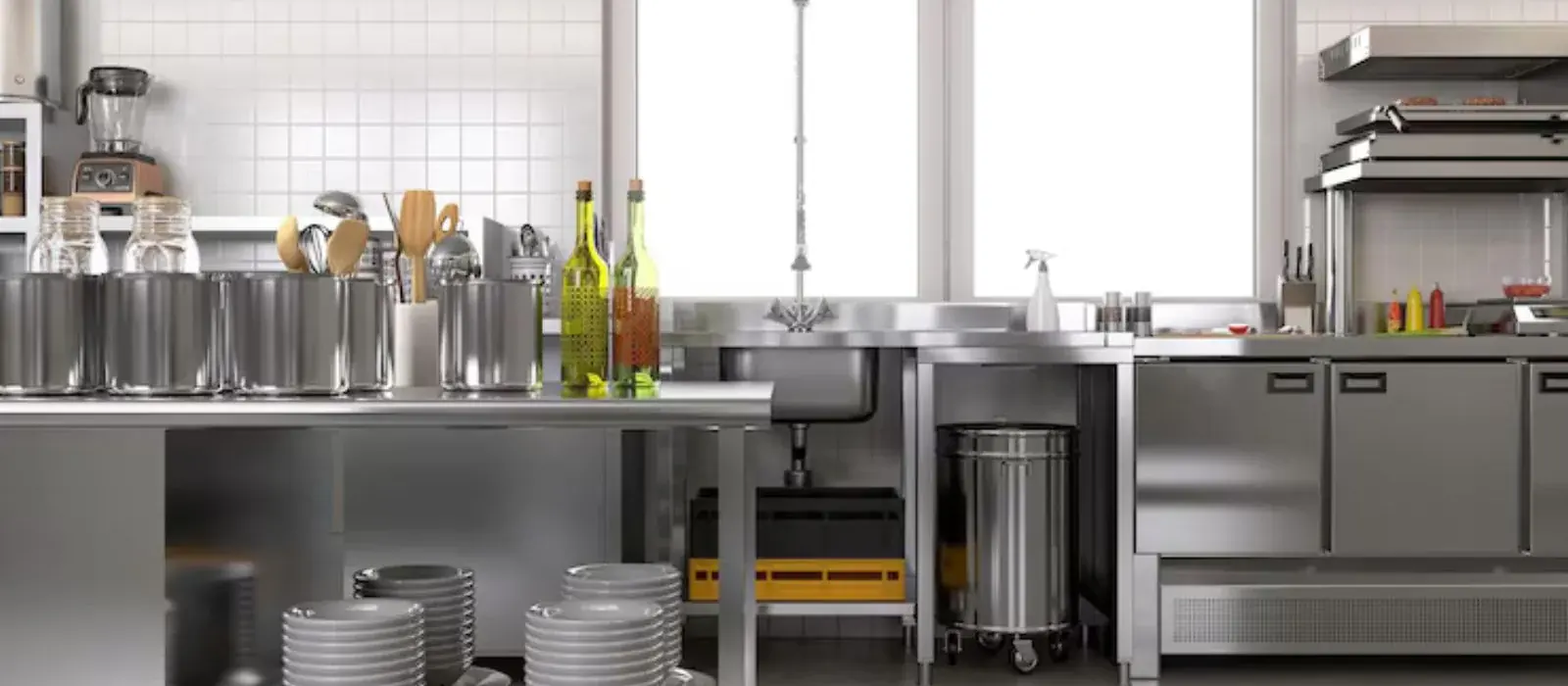
Business restroom overflowing or kitchen backing up
Commercial plumbing covers the supply, drain, fixture and kitchen lines of shops, offices and restaurants, and the 24/7 emergency line is open for them at night, on weekends and on holidays. While you wait, close the water at the fixture stop or the main building valve, and stop flushing and running sinks.
A restaurant with sewage on the floor should stop food prep in that area and ask the local environmental health office whether it can stay open. Gwinnett, Newton and Rockdale Health posts restaurant inspection reports, so a backup that reaches the kitchen is a records matter as well as a plumbing one.
If you smell gas in a kitchen, leave the building and call the gas utility, for most homes Atlanta Gas Light at 877.427.4321, or 911 first. Call a plumber only once everyone is outside and safe.
- Close the water supply at the fixture stop or the main building valve.
- Stop flushing and shut off dishwashers, ice machines and mop sink taps.
- Rope off wet floors and keep customers and staff away from sewage.
- Stay clear of outlets, panels and equipment sitting in water.
- Take photos of the damage before cleanup for your insurance record.
Signs a business plumbing problem is getting worse
Commercial buildings share lines among many fixtures, so a symptom in one spot often points somewhere else. These are the patterns that usually mean a call is due.
Several toilets gurgle or rise after a flush
Air and water pushed backward through other fixtures suggest the building drain or main is restricted.
Kitchen floor drains back up at the end of a shift
Hot greasy water cools in the pipe and hardens, so a backup after heavy use points to grease or food solids in the branch line.
A stain or drip on a ceiling below a restroom
The leak may be a supply line, a drain joint or a fixture seal in the space above, and the stain can sit far from the source.
Low pressure across the whole building
Pressure that drops everywhere suggests a main valve, a pressure reducing valve or a failing supply line rather than one fixture.
A grease smell or slow kitchen sinks
A full grease trap lets fats pass downstream, where they build up on the pipe wall.
Restrooms, kitchens and the lines behind them
Commercial plumbing differs from a house in volume and in the number of people using the same pipes. A lunch rush can send more water through a kitchen drain in an hour than a household uses in a day.
Restrooms
Many commercial restrooms use flushometer valves, which need a larger supply, commonly 1 inch, than a house tank toilet. A toilet that does not clear on the first flush may have a clogged trap or a worn valve diaphragm, and the cause decides whether it is a drain job or a valve job.
Kitchens
Restaurant kitchens add three-compartment sinks, prep sinks, mop sinks, dishwashers and floor drains, all feeding warm greasy water into the same lines. Gwinnett County Water Resources warns that running hot water over greasy cookware only sends the grease into pipes where it hardens, and a busy kitchen does that all day.
A floor drain that keeps backing up usually needs hydro jetting to scour the pipe wall, because a cable alone often leaves the grease coating behind.
Tenant or landlord
In a multi-tenant building, who owns which pipe depends on the lease. The shared main is often the landlord's and the lines inside your suite are often yours, so check the lease or ask the property manager on the first call.
Businesses along Buford Highway and in the Suwanee Gateway area near I-85 often share a building with other tenants, which makes that question worth settling before the plumber arrives.
Which business plumbing symptom points to which fix
This table is a decision aid. The plumber confirms the cause once the lines have been looked at.
| Symptom | Likely cause | Usual fix |
|---|---|---|
| Several restroom toilets slow | Blockage in the building drain or main | Cable or jetting at the cleanout, camera if it repeats |
| One flushometer toilet weak | Worn diaphragm or partly closed stop | Valve repair, not drain cleaning |
| Kitchen floor drain backs up | Grease and solids in the branch line | Jetting, then a grease trap check |
| Ceiling stain below a restroom | Supply or drain leak above | Trace the source, then repair the joint or line |
| Parking lot ponds after rain | Blocked catch basin or storm drain | Storm drain cleaning |
A line that has clogged more than once should be looked at with a camera before it is cleared again.
Grease trap cleaning and the county FOG program
A grease trap or grease interceptor is a tank in the drain line that slows kitchen wastewater, so fats, oil and grease float to the top and solids sink before the water moves on to the sewer. When the tank is full, grease passes through and builds up downstream, and the first sign is often a slow kitchen drain or a smell. Cleaning means pumping out the contents and scraping the walls and baffles.
Gwinnett County Water Resources says it established a FOG prevention program in 2000, and its FOG page notes that as grease builds up in sewer pipes, wastewater has a harder time flowing. Restaurants can reach the county's FOG supervisor at 678.376.6713 with questions about what applies to their site. Make that call before you schedule service, because the county, not this page, sets what your site must do.
The same page says that if a clog happens on your property, taking care of it is your responsibility, and that a blocked line can end with sewage spilling into a street, a yard or a nearby stream. For a restaurant that is a cleanup bill and an inspection problem at once. Lines past the trap are a job for sewer line cleaning.
Between pump-outs, the county's advice for homes works in a commercial kitchen too. Scrape plates dry, pour used grease into a lidded container for the trash, and keep hot water from washing grease down the sink.
Backflow testing in general terms
A backflow preventer is a valve assembly that keeps water inside a building's plumbing from flowing backward into the public supply. Businesses commonly have them on irrigation, fire lines, boilers and some kitchen equipment, because those connections can hold water that is not safe to drink. Gwinnett County Water Resources lists the backflow preventer as part of the customer's own plumbing.
Testing means a tester closes the assembly's valves and uses a differential pressure gauge to check that the check valves and relief valve hold. How often a test is due depends on the water provider, the type of assembly and the property. Ask your provider what it requires and by when, and keep the test paperwork on file.
An assembly that drips from its relief port, or that was bumped, frozen or removed, is a repair or replacement question rather than a test.
Storm drain and parking lot drain cleaning
A storm drain carries rain runoff, not sewage, and it is separate from the sanitary sewer. On a commercial lot that usually means catch basins, trench drains at loading docks and roof drains tied into underground pipe. Leaves, mulch, trash and silt settle in the basins, and the first heavy rain shows where the water has nowhere to go.
The Gwinnett hazard plan says Suwanee Creek is known for frequent flooding, and that flooding from Hurricane Helene in 2024 closed Martin Farm Road. The city's plan says flooding usually occurs in spring. A business near the creek or on a low lot gains the most by clearing drains before the wet months, since ponding at the door can stop customers and deliveries.
Cleaning uses a jetter or vacuum equipment to pull debris from the basin and flush the pipe. Stormwater emergencies on county systems go to Gwinnett County Water Resources dispatch at 678.376.7000, which takes water, sewer and stormwater calls around the clock. Drains on your own lot are generally yours to keep clear, and the lease will say who handles shared lots.
What drives the price of a commercial plumbing call
A clogged restroom and a full grease trap are different jobs, and the price follows the work. You hear the number before work starts.
Type of problem
A single fixture is quicker than a building drain, a grease trap or a hidden leak above a ceiling.
Building size and access
A large site with long runs or a ceiling that must be opened takes more time than a small suite.
Time of day
After-hours service for a business is priced separately from a scheduled weekday visit, and you hear which one applies.
Equipment
Cable, jetting, camera and vacuum work each use different equipment and time on site.
Repeat problems
A line that has failed before may need a camera pass and jetting, not another quick fix.
Commercial property policies vary widely. Many cover sudden accidental water damage but not wear, maintenance or slow leaks, and sewer backup is often an add-on, so read the policy and call your agent before you need it.
Want your real number?
Describe the job on the phone and get a clear price before any work starts.
Related services and nearby businesses
A backup that keeps returning belongs under drain cleaning, and a hidden wet spot in a wall or ceiling is a case for leak detection before anyone opens the finish.
Businesses just across the line in Duluth call the same 24/7 number as those in Suwanee.
According to Gwinnett County Water Resources, most fats, oil and grease overflows happen on residential sewer lines, and the county lists 678.376.6713 for its restaurant FOG supervisor. Plumbing work in a commercial space follows the same state minimum standard, the International Plumbing Code with Georgia amendments, and the city issues the permit.
Commercial plumbing questions
Yes. The 24/7 line takes calls from businesses at night, on weekends and on holidays. Close the water to the affected fixture, keep people out of wet or sewage areas, and call.
Grease trap cleaning is covered on this page. Describe the trap and its location on the call and the price is clear before work starts, and ask the county FOG supervisor at 678.376.6713 what your site requires.
It depends on your water provider and the type of assembly on your property. Ask the provider what it requires and by when, and the test can be scheduled around that date.
The lease usually decides. Lines serving only your suite are commonly the tenant's, while shared mains are commonly the landlord's, so check the lease or ask the property manager.
The City of Suwanee lists changes to plumbing among the work that needs a building permit. Call the inspections line at 770-945-8996 and ask what applies to your job.
Yes, storm drain cleaning is part of this page. If water is backing up from a county system, also call Gwinnett County Water Resources dispatch at 678.376.7000.