
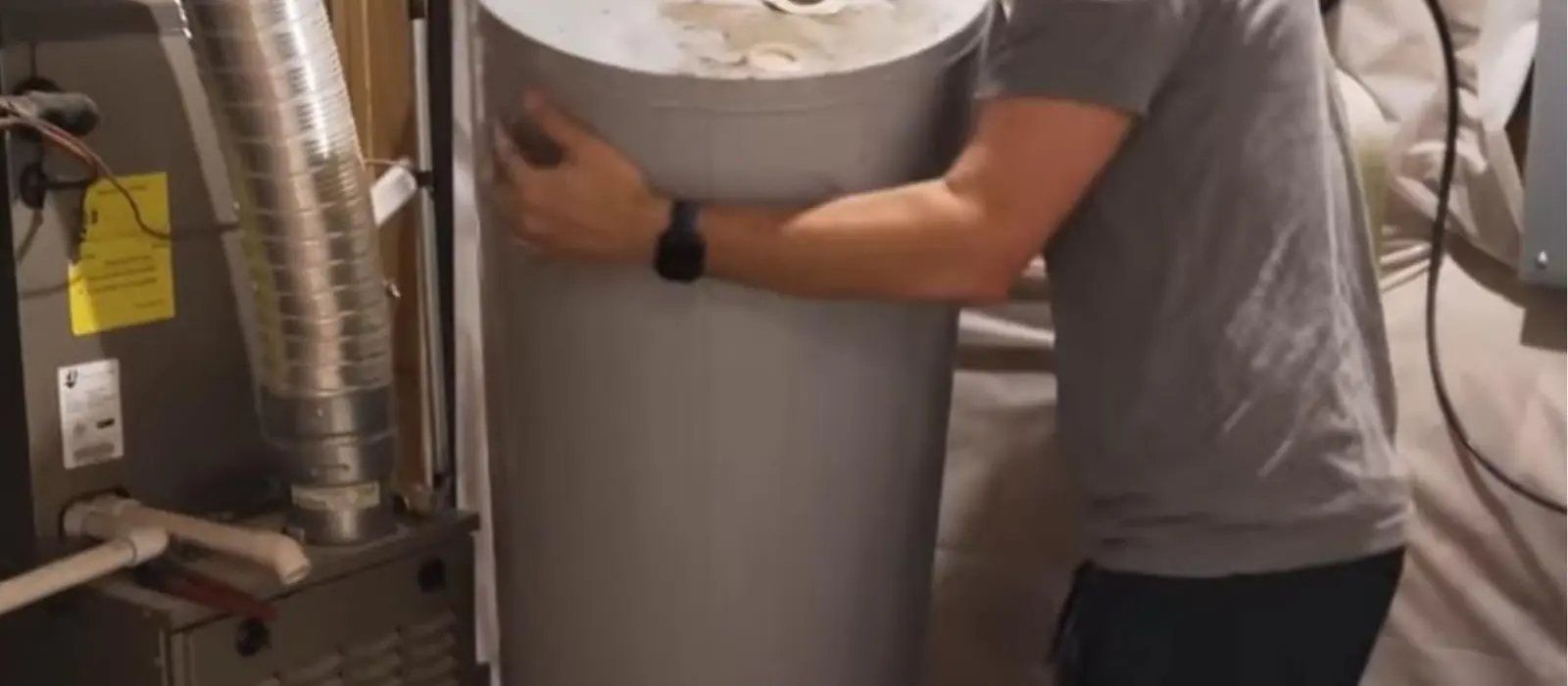
A failed tank can flood a room in minutes
A 40 or 50 gallon tank holds that much water, and a split seam can empty a good share of it onto the floor. The 24/7 emergency line takes failed-tank calls at any hour, and a same-day appointment is offered when the schedule allows.
While you wait, close the cold water valve at the top of the heater and kill the power. Then run a hot tap upstairs for a moment so the tank stops pushing water out of the break. Do not touch a wet floor near a plug, a water heater cord or the breaker panel.
- Close the cold supply valve on the pipe above the tank. If it will not turn, close the main shutoff for the house.
- Switch off the breaker for an electric heater, or turn the gas control knob to off.
- If you smell gas, leave the building and call the gas utility, for most homes Atlanta Gas Light at 877.427.4321, or 911, before calling a plumber.
- Mop or squeegee standing water toward a floor drain or the garage door, and lift anything stored on the floor.
- Take a photo of the data plate on the tank and of the water damage, then call.
Signs the tank is finished
A heater rarely fails without warning, and the clues are easy to miss when you are only looking at the bill.
Moisture at the bottom seam
Water that comes from under the jacket, not from a fitting, means the steel liner has rusted through. No fitting or valve will fix it.
Rusty hot water
Hot taps that run brown while the cold side stays clear point to a tank corroding inside, especially if the anode rod is long gone.
Loud banging after each heat cycle
A bottom layer of hard sediment bakes onto the steel and can cause pinhole failures.
A date plate more than a decade old
The serial number encodes the month and year of manufacture. Once a tank is well past ten years, the next failure usually arrives in the shell.
Not enough hot water, even after repairs
Elements, thermostats and dip tubes can be replaced, but when the tank keeps failing in new ways, money goes further into a new heater.
How a replacement swap goes
Replacement removes the old heater and sets a new one on the same connections, with new supply connectors, a fresh relief valve discharge line and a code-compliant vent for gas. It is a half-day job in most garages and closets, longer if the existing plumbing needs correction.
From a dead tank to hot water
The order matters because the old heater has to be drained before anything is disconnected.
Isolate and drain
Water and fuel are shut off. A hose runs from the drain valve to a floor drain or outside, and the tank empties by gravity.
Disconnect and remove
Supply lines, the gas or electrical connection and the vent are separated. A full tank weighs several hundred pounds, so the empty shell is removed with a dolly.
Set and connect the new unit
The new tank goes on a drain pan if one is required, then new connectors, valves, the relief valve and its discharge pipe are fitted.
Vent and fuel check
On gas, the flue is checked for draft and joints are tested for leaks. On electric, the wiring is checked against the nameplate before the breaker goes back on.
Fill, purge and test
The tank fills with a hot tap open until air is out, then the thermostat is set and the heater runs through its first heat cycle while connections are watched.
Picking the right size for your house
Tank size alone is a poor guide. Georgia's state minimum plumbing code sizes residential heaters by first hour rating, which is how many gallons the heater can deliver in the first hour of heavy use, and the code table ties that number to bedrooms and bathrooms. Manufacturer recommendations are also accepted.
The first hour rating is printed on the yellow EnergyGuide label. Two 50 gallon tanks can differ by 10 gallons or more on that label, and a high-recovery gas unit often beats a larger electric tank with slow elements.
Match the swap, then check the household
A like-for-like swap is the simplest path because the connections, venting and clearances already fit. If the house now has more bathrooms, more people or a soaking tub than when the old tank went in, the new unit should be sized to the household you have today.
Very large heaters, above 120 gallons or 200,000 BTU per hour, fall under a separate state boiler and pressure vessel rule. Ask your installer if your unit is in that range.
Swap it yourself or have it installed
A heater swap looks simple until you reach the gas connection or the vent. Here is the honest comparison.
Doing it yourself
- Saves labor if the connections are standard
- Needs a dolly, a hand truck and two people for the tank
- Gas lines, flues and the relief valve discharge are easy to get wrong
- The city permit still applies to the work, and an inspection may follow
- A mistake on gas venting risks carbon monoxide in the house
Installed by a plumber
- Old tank is drained and disconnected safely
- Gas leak testing and flue draft checks are part of the job
- Supply connectors, valves and relief discharge are fitted new
- Permit and inspection questions get answered by someone who has done it
- Work is by licensed and insured plumbers
Permits, gas rules and who checks the work
The City of Suwanee building permits page lists plumbing changes and water heater replacement among the work that needs a building permit. The inspections line printed on that page is 770-945-8996. Ask your installer how the permit will be handled for your address and get the answer in writing.
On a gas heater, the gas piping, the appliance and the vent all fall under the fuel gas code. That is why a gas swap includes a leak test on every joint and a check that exhaust leaves the house, not just a hot-water test at the tap.
Permit rules vary by city, so a neighbor in Duluth may deal with a different office and different steps.
What moves the price of a heater swap
The number depends on a short list of decisions, and you hear it before work starts. Having the data plate photo ready makes the quote faster and more accurate.
Fuel and capacity
Gas, electric and heat pump models carry different equipment costs, and a larger tank costs more than a standard 40 or 50 gallon.
Venting and gas piping
Replacing a worn flue, adding a sediment trap or correcting a gas connector adds labor and parts.
Code updates
An old install may need a drain pan, a discharge pipe, a thermal expansion tank or new shutoff valves to meet current code.
Location
An attic or tight closet takes longer than a garage and may need extra safety parts.
Timing
A night or weekend emergency visit can be priced differently from a booked slot.
Home insurance may pay for water damage from a sudden tank failure, but usually not for the heater itself. A slow leak that went unnoticed for months is often excluded, so ask your agent.
Want your real number?
Describe the job on the phone and get a clear price before any work starts.
Related work
If you want on-demand hot water instead of another tank, a tankless water heater changes the venting and sometimes the gas line. A fresh setup in a new space is handled as water heater installation, and a heater that can still be saved may only need water heater repair.
Water heater replacement questions
Yes. The 24/7 line is open at night, on weekends and on holidays. Same-day appointments are offered when available. Shut off the cold supply and the power or gas, and call.
It is possible, but it is a bigger job than a like-for-like swap. Gas to electric needs a 240-volt circuit and breaker space. Electric to gas needs a gas line, a vent and combustion air.
The City of Suwanee building permits page lists water heater replacement among work needing a building permit. Call the city inspections line at 770-945-8996 or ask your installer how it will be handled.
A straightforward like-for-like swap is a matter of hours, not days. Venting corrections, a different fuel or access problems add time, and the plumber can tell you once they see the space.
The old tank has to be drained and disconnected before the new one goes in. Ask about disposal when you call so the answer is settled before work starts.