
Suspected slab leak: what to do right now
If a floor is warm for no reason, water is rising at a baseboard, or the meter spins with everything off, call the 24/7 line. Slab leak service in Suwanee, GA is available at night and on weekends, and a same-day visit is offered when the schedule allows.
Until someone arrives, close the main shut-off valve. A pressurized line under concrete keeps pushing water into the soil and up through cracks, so stopping the supply limits the damage to flooring, walls and cabinets.
A slab leak is a leak in a water supply line that runs inside or beneath a poured concrete floor. It is the pressurized hot or cold line that fails here, not the drain.
- Close the main shut-off valve at the house.
- Keep people and pets off wet floors near outlets, power strips and the electrical panel.
- Lift rugs and move furniture legs off wet carpet or wood.
- Run the meter test (below) so you can tell the plumber what the meter did.
If your home sits on a concrete slab
Not every house has this problem, because not every house has pipes in or under concrete. If your floor plan is slab on grade, the supply lines may run through the slab or in the soil just beneath it. A basement home or a crawlspace home usually has exposed pipes that are easy to reach, and the page on leak detection fits those better.
Slab leaks come from the pipe itself, the soil around it or the way it was installed. Pipes can rub against rock or concrete as a house settles, hot lines expand and contract all day, and a bad joint or a pinhole can weep for months before it shows.
The city's own plan says about 60 percent of Suwanee homes were built in 2000 or later. In homes of that age, ask your plumber what material the supply lines are, because the material changes the repair choice.
What a slab leak sounds, feels and looks like
Most slab leaks announce themselves in odd ways well before water reaches the surface.
A warm patch on the floor
A hot water line leaking under the slab can heat the concrete above it. Walk barefoot across the room and compare.
Water running sound with everything off
A hiss or rush near a wall or floor, even faint, is pressurized water escaping.
A water bill that climbs with no change in use
Gwinnett County Water Resources notes that high bills are often caused by a leak inside or outside the home, and a slab leak is a steady loss.
Damp carpet, lifting tile or musty odor
Moisture finds the path of least resistance, which is often a baseboard or a slab crack.
Low hot water pressure
A drop on the hot side only can point to a leak in the hot line before it reaches the fixtures.
How the leak is found before anyone cuts concrete
A slab is expensive to open, so the work starts with proof. The sequence below is why the location comes first.
Run the meter test
Gwinnett County Water Resources describes it: no water use for two hours, read the meter before and after. If the number moved or the leak wheel kept turning, water is escaping somewhere.
Isolate hot and cold
Closing the water heater valve and checking pressure on each side tells the technician which line is leaking.
Listen and scan
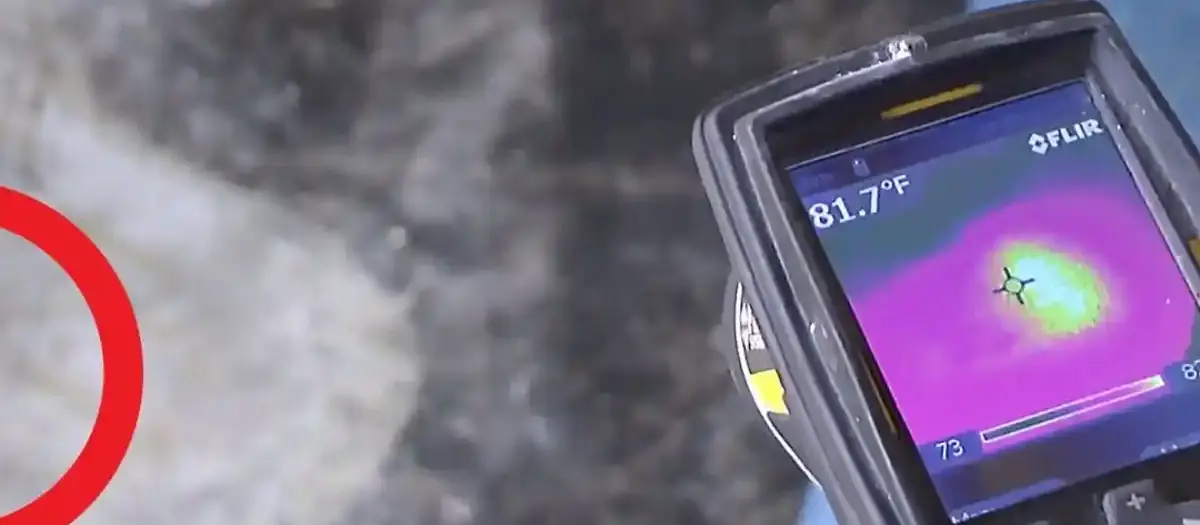
Acoustic listening picks up the hiss through the floor, and thermal readings can show a warm trail on the surface.
Mark the spot
The technician marks the floor above the leak so any opening is as small as possible.
Three ways to fix a leak under concrete
The right choice depends on where the pipe runs, what it is made of and how many leaks it has already had.
| Option | What happens | Best fit | Trade-off |
|---|---|---|---|
| Spot repair through the slab | The floor is opened above the leak, the pipe is cut and repaired, concrete is patched | One clear leak in a sound pipe | Floor covering must be removed and the patch may show |
| Reroute through walls or attic | The bad line is abandoned and a new line runs overhead | Pipes with repeated leaks or hard-to-reach routes | Wall and ceiling openings, more work than a single patch |
| Replace the supply lines | The affected plumbing is replaced with new pipe | Older lines with several weak points | Largest scope and the longest disruption |
Whatever you choose, plumbing changes need a City of Suwanee permit. The inspections line is 770-945-8996.
What drives the price of a slab leak repair
No two slab leaks match. The price depends on a handful of things you can see and a few you cannot until the leak is found.
Depth and location
A leak near a wall is easier to reach than one in the middle of a room.
The floor covering
Tile, hardwood and carpet each cost different amounts to remove and put back.
Number of leaks
One failure is a repair. A line with several suggests a reroute.
Pipe material and age
Older or brittle pipe can crack where it is touched.
Time of day
A suspected slab leak that surfaces overnight is handled as an emergency call, which can cost differently from a daytime booking.
Home insurance often covers sudden accidental water damage but not the cost of repairing the pipe itself, and policies differ on whether they pay to reach a hidden leak. Read the policy and call the agent early.
Want your real number?
Describe the job on the phone and get a clear price before any work starts.
Yard lines, permits and what to ask
The line from the meter to the house is the owner's responsibility. Gwinnett County says its crews maintain the main, the pipe from the main to the meter and the meter, and everything past the meter is yours.
If the repair needs digging in the yard to reach a service line, call Georgia 811 at least three business days before the dig starts. Call 811 before any digging in the yard, and expect the plumbing work itself to need a City of Suwanee permit.
Ask the plumber how the opening will be patched and who handles the flooring. Some homeowners choose to bring in a flooring contractor afterward.
Other work that goes with a floor leak
If the leak was in a buried line, water line repair explains how the pipe from the meter to the house gets fixed, and a split from a freeze is covered under burst pipe repair. For homes near the county line, Lawrenceville homeowners call the same emergency number.
According to the Gwinnett County Water Resources meter guidance, a meter that moves when nothing is running points to a leak, and county employees cannot test for leaks on private property. Georgia 811 asks for notice at least three business days before digging, which matters if the repair means opening a yard.
Slab leak questions
Yes. Yes, the 24/7 line is open at night and on weekends, and a call about a slab leak is answered like any other. Close the main shut-off valve, keep people away from wet electrical areas, and call.
A warm floor spot, a moving meter with the house valve closed and no visible wall damage all point under the floor. A technician confirms with listening and thermal tools before anything is opened.
Not always. A reroute through the walls or attic avoids cutting. Spot repair does open the slab, so the choice depends on pipe condition and leak count.
Often it pays for sudden damage but not the cost of repairing the worn pipe itself. Policies differ on whether they cover reaching the leak, so ask your agent before work starts.
No. Gwinnett County Water Resources says everything on the customer side of the meter is yours. Call the county 24/7 line at 678.376.7000 only if water is surfacing at the meter or the street side.
The City of Suwanee lists changes to plumbing as needing a building permit. Call the inspections line at 770-945-8996 to confirm what applies to your job.