
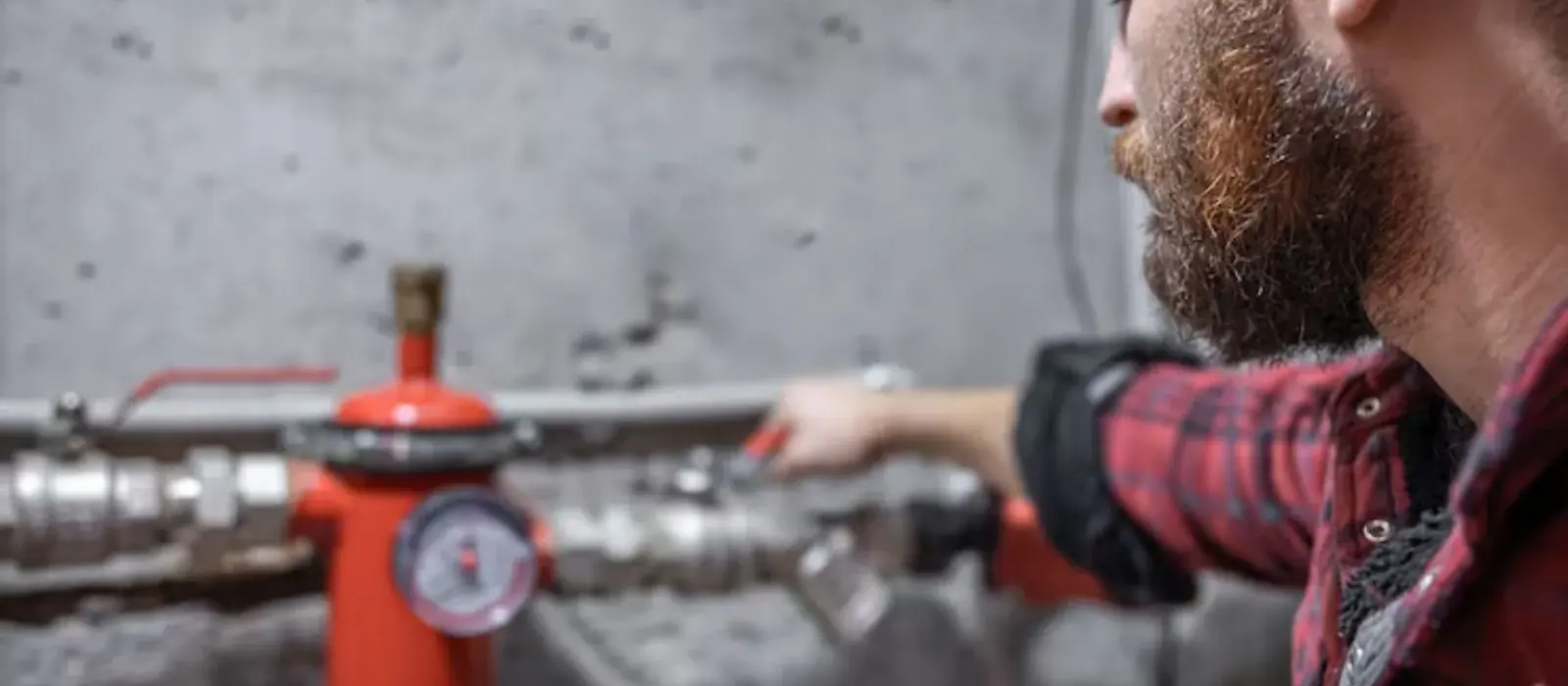
What you pay for when a plumber finds a hidden leak
Leak detection is the work of locating a hidden leak without opening walls, floors or the yard to guess. A technician pressure-tests lines, listens with electronic sensors, scans with a thermal camera or follows a tracer gas to the exact spot. You are paying for the diagnosis, and the repair is normally a separate line on the quote.
Three questions move the price: is the pipe under a slab, inside a wall or buried in the yard, how long has water been escaping, and how many methods does it take to narrow the spot down? A leak on an exposed supply line can be found fast, while one under a concrete floor means more equipment and more time on site.
A leak detection visit starts with those questions on the phone, and your own meter reading answers the first one before anyone arrives.
Read your own meter before you book
Gwinnett County Water Resources publishes a meter test that needs two hours and no tools. If the meter moves while nothing is running, water is escaping somewhere past it, and you can tell the plumber so on the first call.
Shut everything off
Turn off every water-using appliance, including the washing machine, dishwasher and ice maker. Ask everyone in the house to hold off on flushing and running taps.
Find the meter
The county says it should be in your front yard under a metal cover. Lift the lid with a screwdriver and look for insects before you reach in.
Read it and wait
Write down the number. Look at the small leak detection wheel and the needle on the face, then leave the water alone for two hours.
Read it again
After two hours of no water use, the number should not have changed. A moving wheel or a higher reading means a leak on your side of the meter.
The methods behind the line items
A quote usually names one or two methods. Knowing what each does helps you see why one visit costs more than another.
Pressure isolation
The plumber closes valves to cut the supply into sections and watches a gauge to see which section loses pressure. The tools are simple and the test is quick, but it narrows the leak to a run of pipe, not to a spot.
Acoustic listening and correlators
A ground microphone or contact sensor picks up the hiss of pressurized water escaping through a small hole. Two sensors on one line let a correlator work out distance from the time the sound takes to reach each one.
Running appliances, traffic and plastic pipe all dull the signal, which is why the plumber asks you to keep every fixture off during the test.
Thermal imaging and tracer gas
An infrared camera shows temperature differences, which helps with hot-water leaks under floors and behind drywall. Tracer gas, a nonflammable mix of hydrogen and nitrogen, is pushed into an emptied line and detected at the surface.
Both take longer to set up than a gauge test, and that setup time is part of the price.
Drain camera
Not every hidden leak is a pressure line. A cracked or offset drain shows up on a camera pass, and a sewer camera inspection is usually quoted as its own service.
How the tools compare when you read a quote
Use this table to see what each line on a quote is buying. Plumbers often combine two methods on one visit.
| Method | Best at finding | Why it costs more or less |
|---|---|---|
| Your meter test | Whether any leak exists past the meter | Two hours of waiting and nothing else |
| Pressure isolation | Which run of supply pipe is losing water | Quick setup, but it pins down a section, not a spot |
| Acoustic listening | Pressurized leaks in buried or slab lines | Time on site depends on noise and pipe material |
| Thermal camera | Hot-water leaks and wet building materials | The equipment is costly and the image needs interpreting |
| Tracer gas | Small leaks when other methods disagree | The line is drained, filled and tested, so setup is longer |
| Drain camera | Cracks, offsets and root entry in drain pipe | Priced by footage and by access through a cleanout |
Ask which methods are in the quote and which are added only if the first one fails.
What moves the price of leak detection
Two homes with the same symptom can get very different quotes. These are the real reasons, and you hear the number before work starts.
Surface and depth
Slab, tile, hardwood and a buried yard line each block signals differently, and each changes the hours on site.
Number of methods
A quote built on one method costs less than one that expects tracer gas or a second visit. Ask how the plumber decides to add a method.
Pipe type and length
A short copper run in an open crawl space is simpler than a long plastic yard line, which carries sound poorly.
Access
A clear meter box and open floor save time. A finished basement or furniture-covered room does not.
Report and repair
Finding the leak and fixing it are usually separate. Ask whether the repair is quoted at the same visit and what the written report includes.
Many home policies cover sudden accidental water damage, and some treat the cost of finding the leak as part of a covered claim while others do not. Read the policy or call your agent before the visit, and keep the written report either way.
Want your real number?
Describe the job on the phone and get a clear price before any work starts.
Suwanee note: the county meter, your bill and the leak adjustment
Gwinnett County Water Resources says it is not responsible for repairing leaks on the customer's side of the meter, and that county employees cannot work on private property or test for leaks there. The meter is the dividing line, so hunting for a leak past it is a job for a private plumber.
The county's customer FAQ describes leak adjustments on eligible water and sewer accounts, with limits on how quickly you must repair the leak and ask. That page carries a 2019 date, so treat the details as something to confirm. Call Customer Care at 678.376.6800 and ask for the current terms before you schedule the work.
The county's adjustment request form asks for proof of repair. Keep the plumber's written report and invoice, because that paperwork is what lets you ask for an adjustment at all.
How to compare two leak detection quotes
A line that reads only "leak detection" tells you little. A line that names the methods, the areas covered and what the report includes lets you compare like for like.
Ask whether the visit ends with the leak marked on the floor or in the yard. Ask what happens if the first method cannot find it. And ask how the repair will be quoted, since slab leak repair and water line repair need very different access and labor.
The same questions apply for homes just across the line near Duluth or Lawrenceville, where county water guidance is also set by Gwinnett.
According to Gwinnett County Water Resources, an adjustment on an eligible high water bill is offered once in a twelve month period as of May 1, 2019, and the repair must be made within three months of the increased use. Check the county's current customer care page before you rely on that rule.
Leak detection cost questions
Often you can narrow it down. The meter test above shows whether a leak exists, and a dye test in each toilet tank shows silent toilet leaks. Gwinnett Water Resources describes the dye test as 30 minutes with no flushing.
No. The county FAQ says its employees are not permitted to work on private property and cannot test for leaks on your property. A plumber handles anything past the meter.
Gwinnett offers leak adjustments on eligible accounts, but the FAQ we read is dated 2019. Call Customer Care at 678.376.6800 for current terms and keep your proof of repair.
Usually yes, because finding a leak and fixing it are different tasks. Ask for both prices in writing so you can compare quotes fairly.
Write down your meter reading, clear access to the area, and know where your main shutoff is. If water is visible and spreading, close the main valve and call.