
Does this apply to your house?
A slab leak is a leak in a water line that runs in or beneath the concrete floor. It only applies if your home was built on a slab. Homes with a crawl space or basement have their pipes exposed from below, so leaks there are easier to see.
To check, look at the foundation from the yard. A flat concrete edge at ground level and no vents or basement door usually means slab-on-grade. If you cannot tell, check your closing paperwork or ask the plumber on the phone.
What a leak under the floor tends to show
These are the signs callers describe most, roughly in the order people notice them.
A warm or hot patch on the floor
A leaking hot line heats the concrete above it. You feel it barefoot on tile, laminate or hardwood, and it does not match the sun coming through a window.
The sound of running water
A faint hiss or trickle in the quiet of night, with every fixture and appliance off, suggests pressurized water escaping.
A meter that moves with everything off
If the dial turns when no one is using water, water is leaving the system somewhere between the meter and the fixtures.
Damp flooring, baseboards or a musty smell
Moisture wicks upward through concrete into carpet backing, lifting laminate and the bottom of drywall. Mildew smell often arrives before any visible stain.
A water bill that climbs, or hot water that runs weak
The heater refills constantly to replace what is escaping, and pressure at the taps drops.
A safe sequence to confirm it before you call
None of this requires opening a floor. It takes about an afternoon and gives the plumber useful information.
Do the meter test
Turn off all water-using appliances, read the meter, wait two hours and read it again. Gwinnett County Water Resources expects the number not to change.
Close the water heater inlet
Shut the cold supply valve on top of the water heater and check the meter again. If it stops, the leak is on the hot side. If it keeps moving, the cold side is more likely.
Walk the floor barefoot
Cover each room slowly. Note where it feels warm, and take a photo with a coin or tape marker so the spot can be found again.
Look outside
Check the yard between the meter and the house for soggy ground, a patch of greener grass or water pooling against the foundation.
Close the main if water shows
If water is visible and spreading, shut the main valve and call.
How a plumber pinpoints the spot
Locating comes before any cutting. A good location can mean the difference between one small opening and a floor torn up across several rooms.
| Method | How it works | Limit |
|---|---|---|
| Acoustic listening | Sensors on the floor and fixtures pick up the sound of escaping water | Needs quiet and all fixtures off |
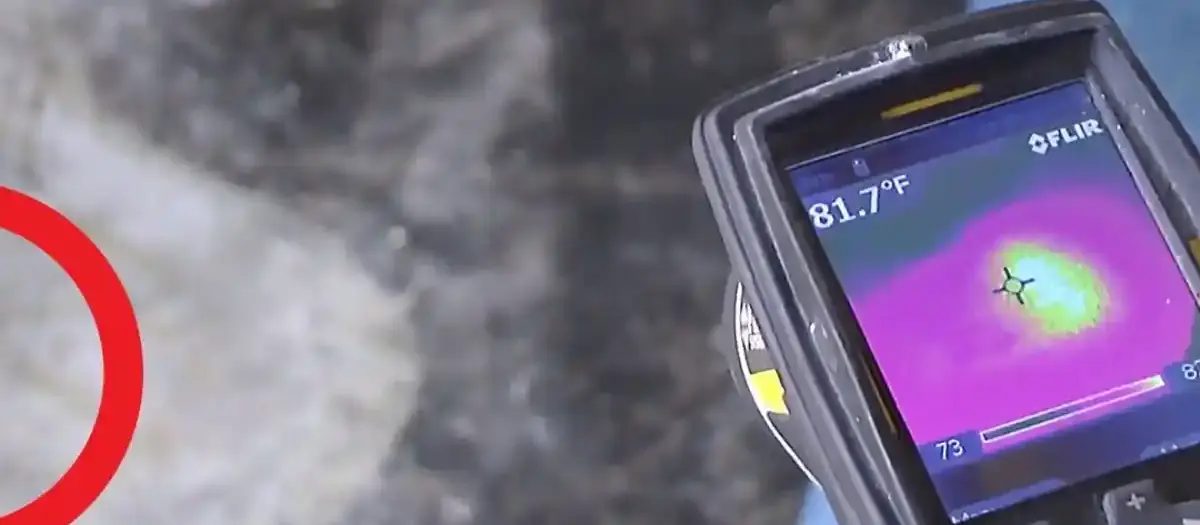
| Thermal imaging | An infrared camera shows warm paths from a hot line | Only helps with hot-water leaks |
| Tracer gas | A nonflammable hydrogen and nitrogen mix is detected at the surface | Longer setup, used when other methods disagree |
| Pressure isolation | Valves split the system into sections that are tested one at a time | Narrows to a line, not a point |
A leak detection visit often combines two of these.
Open the slab, or reroute the line
Once the leak is found, there are two main ways to deal with it. The right one depends on how many leaks there are and what condition the rest of the pipe is in.
Open the slab and repair
- Fixes the one failing spot where it sits
- Requires cutting concrete, then patching and restoring the flooring
- Makes sense when one leak is isolated and the pipe around it is sound
- Leaves the rest of the old line in place
Reroute the line
- Runs new pipe through the attic or walls and abandons the leaking section
- Avoids cutting the slab in most rooms
- Makes sense after a second leak or when the old copper is worn
- Can grow into repiping a larger part of the house
Suwanee note: the yard, the meter and 811
Gwinnett County Water Resources suggests walking your yard for soggy areas that can indicate a leak in underground pipes. If the wet patch sits between the meter and the house, the service line is a likely suspect, and that line may be what feeds the slab.
The county's resident responsibility page says you are responsible for the water and sewer systems inside your home and underground to the point of connection with the county system. A leak on that side is yours to fix, which makes the meter test worth doing first.
If the repair needs a trench in the yard, Georgia 811 says to contact it by phone at 8-1-1 or at georgia811.com at least three business days before digging. Its tolerance zone is 18 inches on either side of a buried utility line, so mark and wait before any shovel goes in.
What to expect once it is confirmed
Planned work for a confirmed leak is quoted before it starts, and the plumber can explain the options in the order above. Slab leak repair covers both opening the floor and rerouting the line.
Some homeowners just outside the city, near Duluth or Lawrenceville, ask the same questions about how much floor will be disturbed. Ask the plumber where cuts will be made, how the floor will be restored and who is responsible for finishing the surface.
Water damage from a sudden break is often covered by a home policy, while the cost of the pipe itself usually is not. Check your policy before the work starts.
According to the county's meter guidance, the meter sits in the front yard under a metal cover, and a meter that keeps moving while every fixture is off points to a leak somewhere past it. That reading is the cheapest first step before anyone talks about cutting into a floor.
Slab leak questions
A warm patch on the floor, a hiss from the floor and damp flooring far from any wall point to the slab. A leak in a wall tends to stain the drywall above it. A plumber confirms the location with sensors before cutting anything.
The meter proves a leak exists, and closing the water heater inlet can show whether it is on the hot side. It cannot tell you where the leak is. That takes locating equipment.
No. The county says everything on the customer's side of the water meter is yours to maintain, and county employees cannot work on private property.
If the work requires digging in the yard, Georgia 811 asks for at least three business days of notice before digging. We did not find a Georgia 811 rule for cutting an indoor slab, so ask your plumber how they handle it.
Yes if water is visible or the floor is wet. Close the main valve and call. If you are not sure the leak is serious, the meter test above gives you the answer first.