
The short answer on a bad toilet handle
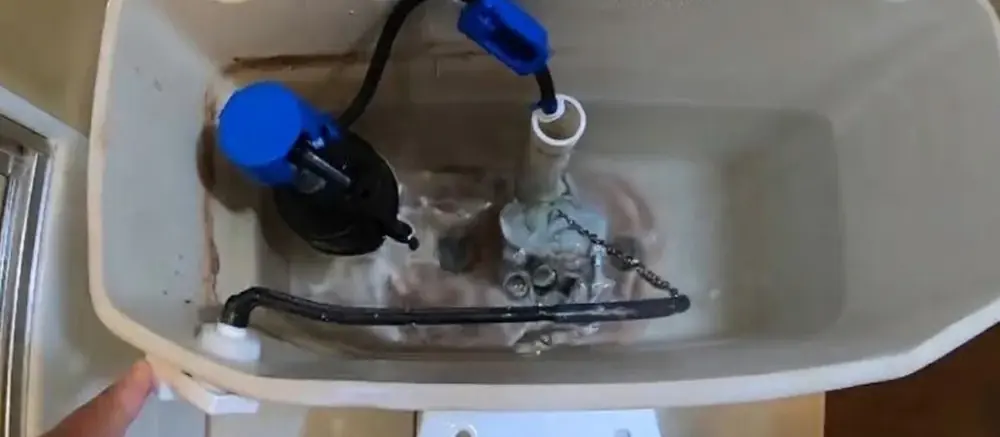
Most toilet handle problems come down to one of three parts: the handle nut, the lever arm inside the tank, or the chain that connects the arm to the flapper. A loose handle is a tight nut away from fixed. A handle that feels limp or must be held down usually has a chain that is too long, unhooked or snapped.
Lift the tank lid, flush once and watch. Whatever moves wrong in the first two seconds tells you which part to replace, and the parts are cheap hardware store items that fit most standard tanks.
What the handle is telling you
How the handle feels when you press it points straight at the failed part.
Handle wobbles side to side
The mounting nut has backed off or the plastic around the hole has worn. Tightening often solves it, a worn nut means a new handle.
Handle goes down with no resistance
The lever arm may have snapped off inside the tank, or the chain has come unhooked from the arm.
Handle sticks down after a flush
The chain is likely catching on something, or the arm is rubbing the tank wall because the handle is crooked.
Weak flush, you have to hold it down
Too much slack in the chain means the flapper lifts only part way and closes early. Too little slack does the opposite and keeps the flapper from sealing.
Handle looks fine but toilet runs
The handle is innocent. Check the flapper and the fill valve.
Fixing a loose or limp handle in six steps
You need a pair of pliers or an adjustable wrench, and a replacement handle only if the old one is cracked or corroded.
Shut the supply
Turn the oval or round valve behind the toilet clockwise until it stops, then flush to empty most of the tank.
Look at the chain
Open the lid. The chain should hang from the end of the lever arm to the flapper with about half an inch of slack, not a tight line and not a loop that can slip under the flapper.
Tighten the nut
The mounting nut on the inside of the tank usually has a reverse thread, so turn it counterclockwise to tighten. Snug is enough, since plastic nuts crack when forced.
Replace a broken handle
Unscrew the nut the other way, pull the handle out through the front of the tank and match the new one to the same side: front, side or angle mount.
Rehook and trim the chain
Clip the chain to the arm hole that gives half an inch of slack. Extra chain can be trimmed with pliers, but leave a couple of links spare.
Test flush three times
Turn the water back on and flush. The flapper should lift fully, drop cleanly and the tank should refill without the handle sticking.
Suwanee note: the flapper is the usual leak, and the county hands out free kits
While the lid is off, look at the rubber flapper at the bottom of the tank. Gwinnett County Water Resources says the cause of a leaking toilet is most often a faulty flapper, and that a toilet running constantly could waste 200 gallons of water or more every day. A new handle will not cure that, so a flapper that is soft, warped or slimy is worth replacing in the same visit.
The EPA WaterSense page on residential toilets backs this up, noting that most toilet leaks come from old or worn-out flappers. If your toilet refills on its own now and then when no one has flushed, treat the flapper as the first suspect.
Gwinnett County Water Resources also says free low-flow home retrofit kits are available at its Central Facility. The kit holds a low-flow showerhead, faucet aerators and toilet leak detection dye tablets, so one trip also covers the dye for checking your new flapper seal. The county conservation line for the kits is 678.376.6722, and the county page also gives an email, dwrconserve@gwinnettcounty.com.
Do it yourself or call a plumber
Most handle jobs are homeowner work. The line gets crossed when the problem is not the handle.
Fix it yourself when
- The handle is loose and the nut simply needs snugging.
- The chain is unhooked or the wrong length.
- The handle is cracked, corroded or snapped off and the tank is otherwise dry.
- You have the right replacement for front, side or angle mount.
Call a plumber when
- The tank cracks, leaks at the bolts or sweats onto the floor.
- The flush valve seat is pitted so a new flapper still will not seal.
- The toilet keeps running after a new flapper and handle.
- The nut will not turn, the tank is old and a bolt is seized.
Handle styles and what each one costs you in repair effort
The style on your tank decides which replacement fits and how much room you have to work.
| Style | Where it mounts | What goes wrong most |
|---|---|---|
| Front mount lever | Center of the tank front | Loose nut, chain slack |
| Side mount lever | Left or right tank corner | Arm rubs the tank wall, wrong side bought |
| Angle mount lever | Corner or cut tank | Arm angled the wrong way for the chain |
| Dual flush button | Top of the tank lid | Rod linkage sticks, needs matching parts |
If you cannot tell which style you have, take a photo of the inside of the tank to the store.
When a handle repair is really a flush valve problem
Some tanks leave the factory with a flush valve that is a different design from the standard flapper type. A canister or tower style valve has a floating cup instead of a hinged flapper. The handle chain attaches to a cup lift, and the repair kit for it is different from a flapper kit.
If you pull the lid and cannot find a rubber flapper, do not guess at a replacement. Note the brand and model stamped inside the tank, which is usually a small label near the water line.
A toilet that has been rebuilt more than twice with parts that keep failing can be on borrowed time. At that point a plumbing installation visit for a new fixture may cost less than another round of parts, and our toilet repair page explains what a plumber checks first.
Before you buy replacement parts
A two minute check saves a second trip to the store.
- Write down the tank brand and the handle location: front, side or angle.
- Check whether the tank has a flapper or a canister style flush valve.
- Measure the chain from lever arm to flapper while the tank is full.
- Press the flapper down by hand. If it seals, the old rubber was the issue.
- Look at the supply line and shutoff for drips while the lid is off.
If the shutoff valve itself will not close, stop. Forcing it can crack the valve stem, and a plumber can swap the valve with the main closed.
Where we work around Suwanee
Homeowners in Suwanee call the same 24/7 line as neighbors in Duluth and Lawrenceville. Same-day appointments are available when the schedule allows.
A handle repair is usually a daytime job. If a tank is leaking onto the floor, close the supply valve and call.
Toilet handle questions
The nut that holds it to the tank has probably backed off. It tightens counterclockwise on most tanks. If it keeps loosening, the plastic handle or the hole is worn and the handle should be replaced.
No. That usually means the chain has too much slack and the flapper drops before the tank has emptied. Move the chain clip one hole closer to the arm and test again.
Not any. The three common mounts are front, side and angle, and a side handle will not reach a front hole. Match the mount and the side, then check the arm length against the chain.
Gwinnett County Water Resources says free low-flow retrofit kits are at its Central Facility, and the county leak page gives 678.376.6722 and an email for free toilet leak detection kits. Call first to confirm what is in stock.
Gwinnett County Water Resources says a toilet running constantly could waste 200 gallons or more every day. Replacing a worn flapper is one of the cheapest fixes in a house.